>
>
Living Cheap in Someone Else's Home. Is Geo-Arbitrage Just a Polite Word for Taking Advantage?
Living Cheap in Someone Else's Home. Is Geo-Arbitrage Just a Polite Word for Taking Advantage?
Everyone talks about how much they saved. Nobody talks about what changed for the people who were already there. Geo-arbitrage gave me a better life. This is my honest attempt to reckon with what that means.

Anita Chen

What is geographic arbitrage?
In short, earn income in a high-wage economy, live in a low-cost country, and pocket the difference whether as savings, investments, or simply more time. It’s one of the most cited reasons people go remote and start moving. It was part of my reason when I just started my journey around 10 years ago.
But after understanding this ecosystem, in a place where I was unmistakably the outsider. I started asking myself “ Do I really just want to arbitrage?”
I am an Outsider. Let Me Say that First.
I am not going to stand on a moral high ground here. That’s not what this is.
Compared to the cost of living in the West. Taiwan itself is also a destination for many remote workers looking to stretch their income across East Asia. So when I, as a Taiwanese, choose to live in Latin America or Southeast Asia, where prices are slightly lower still, I am very much benefiting from the gap. The same budget that would feel ordinary back home suddenly buys a better life somewhere else. However, I also have this complex feeling that can resonate with how local people feel when they see more and more expats “colonize” their homeland.
That's a fact I can't sidestep. And honestly, I don't want to.
When the topic comes up with other nomads and expats, I often say :
"I think geo-arbitrage is one of the most important reasons people choose this life."
What I don't always finish saying is the second half of that sentence.
I keep asking myself “While I'm enjoying all of this, can I do it a little better?”
The Cost of Geo-Arbitrage Is Often Paid by Someone Else
Before I get to what I actually do about this, I want to name something plainly:
The digital nomad boom has made life measurably harder for people in some of the most popular destinations.
In Canggu, Bali, cafe menus switched from Bahasa Indonesia to English and prices multiplied. Neighborhoods that once belonged to locals became consumption spaces that only foreigners could comfortably afford. Gym restaurants, and guesthouses slowly replaced the green.
In Bangkok, Thailand, landlords converted long-term rentals into Airbnb listings and local workers had to move further out, adding hours to their commutes.
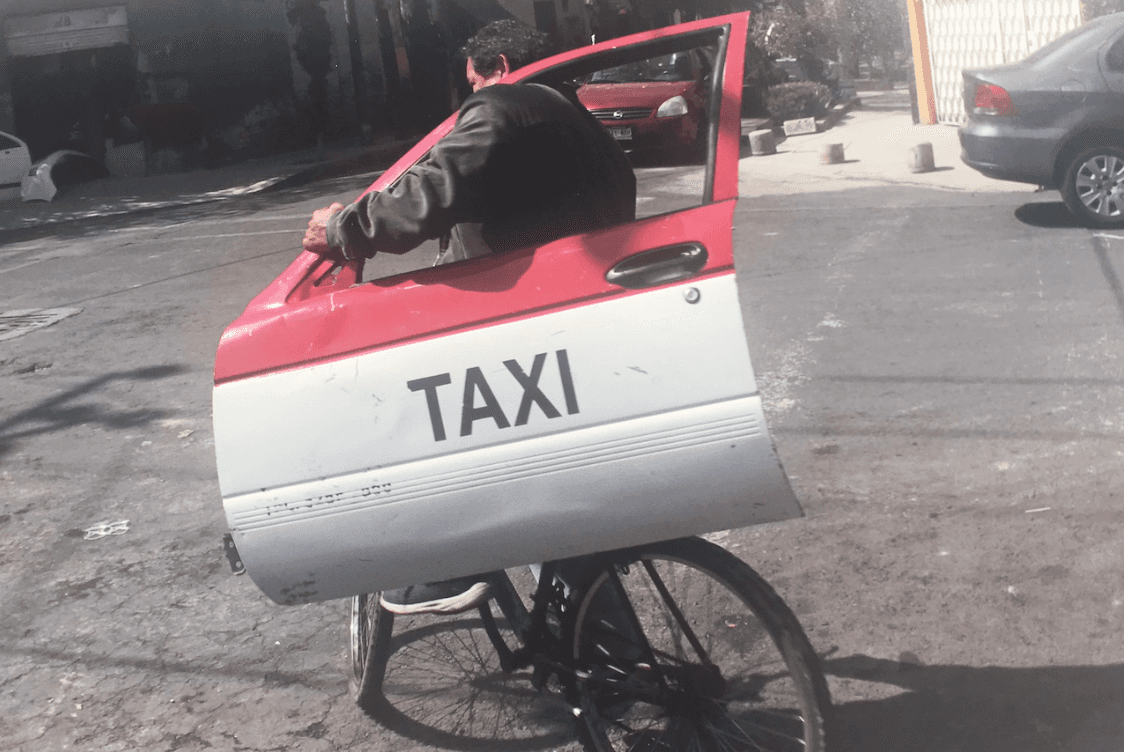
In Mexico City, a wave of foreign remote workers drove rents up sharply within just a few years. Long-time residents and local people were priced out and moved to Estado Mexico.
And here’s the part that stays with me. It’s not just locals capitalizing on the opportunity. Foreign investors joined too. As if capitalism doesn’t need a passport it crosses borders more freely than any nomad ever could.
I’ve watched this happen across ten years of living abroad. It’s not theoretical. It’s the texture of daily life in these places.
Geographic arbitrage doesn’t just create personal financial gains. It creates ripple effects through entire communities. Both of those things are true at the same time, and they both.
Language Is the Most Honest Bridge
I stumbled into Mexico with almost no Spanish. For a long time, I was that foreigner who smiles and nods and hopes for the best. Then, slowly, something shifted enough words, enough context, enough courage to just try and almost everything about how I experienced being there changed with it.
Learning the local language felt like being handed an invisible key.
Not to tourist attractions or expat-reviewed brunch spots. To the version of a place that doesn't show up on Google. The market vendor told me which fruit was sweetest this week and why, because the rains came late this season. The joke the woman at the street food stall made to her neighbor, and the fact that I could actually laugh along instead of just smiling politely at the edges of a conversation I couldn't enter.
Language lets you catch the things that don't translate. A poem where "higo" (fig in Spanish) sounds uncannily like "ego" in English, and suddenly a whole layer of meaning opens up. Two friends in Mexico City named their boba tea shop "Te Bajo la Luna", where “te” means both tea and you, so the name holds two meanings at once: tea that descends from the moon, and I bring you down from the moon. That kind of wordplay lives entirely inside the language.
And then there are the stories that people only share after you've shown that you're genuinely trying to meet them where they are. Not performing fluency. Just trying.
This is why, even in an era of AI translation tools and real-time transcription, I still believe learning a language matters in a way that technology hasn't replaced. I say this not only as a language teacher, but also as someone who has felt the difference. Language is more than just a communication tool. In my opinion, it's the medium through which two people from entirely different backgrounds can start to build a stronger bond.
No algorithm captures what happens when you say "¿Qué onda, güey?" to someone in Mexico and get it right. They laugh. They pull you in for a hug. Something that was a transaction becomes a moment.
Bali, January: What I Actually Saw
I spent time in Bali this January.
The density of the digital nomad scene is genuinely startling. In Canggu, almost every corner has a co-working space. Every café is full of open MacBooks, including mine. On the surface, it looks like paradise for remote workers.
A friend who'd lived there five years ago said to me over coffee: "It looks completely different now. I barely recognize it."
A Balinese friend told me that when he was young, Canggu was a quiet village surrounded by rice fields. Those fields are now boutique hotels and infinity pools designed for Instagram. He said it without anger. Just as a fact. That tone, matter-of-fact, not bitter, makes me can't stop thinking about it.
Bali's beauty is real. The warmth of its people is real. The "digital nomad paradise" image was constructed by a specific group of people is also real now.
So What? Should We Just Not Go?
No. I don't think that's the answer.
The question was never really should I go. It's how I exist once I'm there.
Everyone grows up with a different baseline.
In the United States, spending $50 on a single meal out is completely normal. In Taiwan, that same meal might cost $20, and you'd consider it a decent dinner. Neither of those is wrong. They're just different reference points shaped by where you grew up, what your family considered normal, and what your currency has always been able to buy.
So when an American and a Taiwanese person both relocate to a country with a lower cost of living, of course they'll experience it differently. Of course they'll make different judgments about what feels "cheap," what feels "fair," what feels like abundance. That's not hypocrisy. That's just the weight of where we came from.
Rather than debating who's spending correctly or whose perspective is more valid, I think there's a quieter, more honest question we can ask instead: What is happening to the people who were already here?
In a world that increasingly encourages us to optimize for our own experience to track our savings, curate our lifestyle, document our freedom, it can become very easy to stay absorbed in our own story. And I say this as someone who has done exactly that.
But sometimes, the most grounding thing we can do is shift our gaze slightly.
In a world that keeps telling us to optimize our own experience, advocate for our own needs, and center our own story, maybe occasionally, we can put that self down for a moment. Just out of curiosity about someone else's.
Instead of: "I love living here, I appreciate that I only spent $20 on a full meal today."
Maybe also: "That taco used to cost 12 pesos. Three years later, it's 25."
Same street. Same vendor. Very different realities depending on which side of the transaction you're standing on. Neither perspective cancels the other out. But holding both of them at the same time, that's where something more honest starts to live.
These are the things I’m cautious about . Not rules.
Spend intentionally inside the local economy : This doesn't mean avoiding nice cafés. It means not letting your entire consumption pattern exist within the expat bubble. Breakfast at the market. Groceries from the neighborhood shop. Occasionally giving up convenience to put money somewhere it circulates locally.
Learn a few words of the language, even just a few : Thank you. How much is this? How are you today? You won't become fluent. That's not the point. What these phrases communicate is: I know I'm a guest. I respect that this is your home. That posture is more genuine than any amount of thoughtful spending.
Stay longer. Move slower. : Flash travel can actually be harder on a place than slow living. It’s more transactional, less integrative. When I'm somewhere, I try to stay long enough to actually fall into the local rhythm rather than just consuming its highlight reel. Part of why I spent most of six years in Mexico is this: Truly living each day, in all its ordinary texture, is already meaningful in itself.
Stay honest about what you are. : I'm an outsider. I have mobility privileges that most people in the places I visit don't. Admitting that it's just clarity. And clarity changes how I make decisions.
Geo-Arbitrage Can Be a Tool. It Doesn't Have to Be the Point.
I'm not against geographic arbitrage. Smart financial planning is legitimate. Wanting to live well within your means or build savings that create future freedom is completely reasonable.
But I want geo-arbitrage to be a means, not an end. I want to move through the world with more gratitude than calculation. I want to be in a place because I want to actually enter a culture through its language and understand why so many people call it home.
When the motivation shifts from saving money to understanding something, the way you exist in a place starts to shift too. And maybe that shift, from arbitrageur to witness, from consumer to participant, is what keeps digital nomadism from being just a smarter version of the same extractive game.
A Question for Everyone on the Road
In the place you've chosen to live, what do you want to leave behind?
Not your luggage. Not your best photos. Not your Airbnb rating.
But YOU. The fact that you were there.
About

Featured Posts


Explore Topics