>
>
The Durability Paradox: How Tatung Built a Product So Good, It Had to Reinvent Its Entire Business
The Durability Paradox: How Tatung Built a Product So Good, It Had to Reinvent Its Entire Business
Tatung rice cookers haven't lost market share. They've outlasted their own business model. This case study examines the Durability Paradox: what happens when a product is built so well it eliminates its own repurchase cycle, and what Tatung is doing about it.

Anita Chen

Subscribe Nita_scovery's newsletter The Shine Lab for more on international business, cross-cultural strategy, and the product stories worth paying attention to.
My grandmother bought a Tatung rice cooker decades ago. It still works. My family has never needed to replace it.
That one sentence contains both the highest praise a product can receive and one of the most fascinating business problems in modern manufacturing.
Ask anyone in Taiwan what brand comes to mind when they think of a rice cooker. The answer is almost always the same: Tatung. The brand has neither dominated advertising nor reinvented itself with aggressive retail expansion. The original product, the one their grandmother bought, or their mother received as a wedding gift (a legit story in my family) , is still sitting on the kitchen counter, still working, still cooking rice every single day.
Tatung didn't lose the market. In brand recognition terms, it still is the market.
What Tatung faces is something far more unusual and far more interesting from a business strategy perspective: a product so well-engineered that it eliminated its own repurchase cycle. When a product lasts for three generations, you don't get three generations of customers. You get one purchase, passed down.
Tatung didn't fail. It succeeded too well. And what it did next is worth paying close attention to.
Let's Be Precise About What Actually Happened
Tatung's brand recognition in Taiwan remains remarkably strong. When Taiwanese consumers think of "rice cooker," Tatung is still the default answer. The product has not been displaced by a superior competitor. It has not lost consumer trust. What it has lost is the purchase occasion itself.
Here's the math that makes this visible. A typical consumer appliance lasts roughly five to eight years before requiring replacement. In that model, a brand captures a customer, then recaptures them every few years as a repeating revenue cycle. Tatung's rice cookers routinely last twenty to forty years. Some units from the 1970s are still in active daily use.
In a household where grandmother's Tatung still functions perfectly, there is no purchase occasion. The product has pre-empted its own demand. This is the business consequence of genuine engineering excellence, and it creates a strategic problem that is genuinely difficult to solve, precisely because the problem is also the greatest strength.
Three Generations, One Purchase
The pattern repeats across Taiwanese households with striking consistency.
A grandmother purchased a Tatung rice cooker in the 1970s or 1980s. It becomes the household's standard appliance: reliable, simple (basically one switch), and never requiring attention. Her daughter inherits it when she sets up her own home, or receives a new one as a wedding gift. That daughter's children grow up with the same cooker in the kitchen.
By the time the third generation reaches adulthood and forms their own household, the inherited Tatung is still functional. The brand is deeply familiar, possibly the most trusted appliance brand in their mental model, but that trust does not translate into a transaction because the previous transaction is still delivering value.
From a revenue perspective, the outcome is the same as losing the customer. From a brand equity perspective, it's entirely different. That difference matters enormously for how the business problem should be diagnosed and, more importantly, addressed.
What This Reveals About Product Strategy
The Tatung case exposes a tension at the heart of product design that most businesses never have to confront directly: the conflict between engineering integrity and business model sustainability.
Most consumer goods companies resolve this tension through planned obsolescence, designing products to degrade, become incompatible, or feel dated within a predictable timeframe. This creates a reliable repurchase cycle that funds R&D, supports employment, and keeps revenue predictable. It is a business model, not a conspiracy.
Tatung, whether by design philosophy or engineering culture, built the opposite. The bimetallic thermostat at the core of the classic design has virtually no failure mode under normal use. There is nothing to break, nothing to update, nothing to replace. This is admirable. It is also, from a purely commercial standpoint, a model that collapses under its own success.
The deeper insight for product strategists is that durability and repurchase are in structural tension. A product strategy that maximizes one will almost always constrain the other. Companies that build for longevity need to design their business models around that reality from the beginning, through adjacent product lines, services, accessories, or experience extensions, rather than discovering the constraint after the market has matured.
Tatung built for longevity without building the business model to support it. That gap is where the real strategic story begins.
What Tatung Actually Did About It
Here is where the story gets interesting, and where most analyses of Tatung stop too soon.
Rather than watching the repurchase problem quietly compress its business, Tatung made a deliberate choice: stop trying to sell a replacement for a product that didn't need replacing, and start building a brand that people wanted to be part of even when they didn't need a new cooker.
The transformation unfolded across three directions.
Reinventing the object itself.
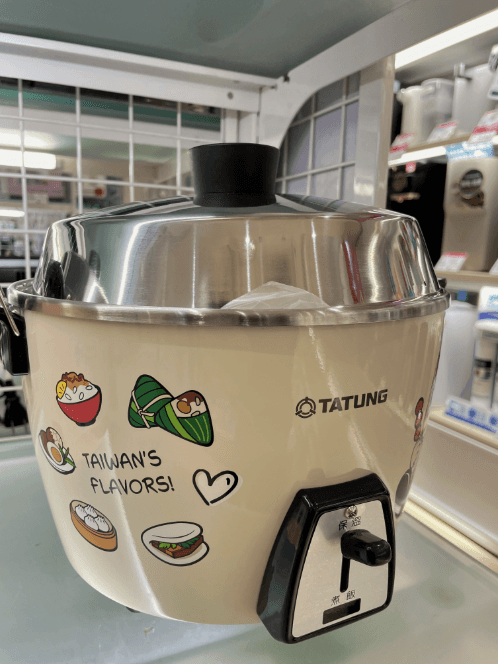
Tatung moved away from the traditional red and green colorways that had defined the product for decades and introduced macaron pastels, matte metallic finishes, and anniversary limited editions. The rice cooker, once purely functional, became something people wanted to display. Collaborations with Hello Kitty, Disney, and the Japanese textile brand SOU·SOU repositioned a kitchen appliance as a piece of home décor. Suddenly, it is something that says about you, not just something that cooked your rice.
Going smaller to reach new households.
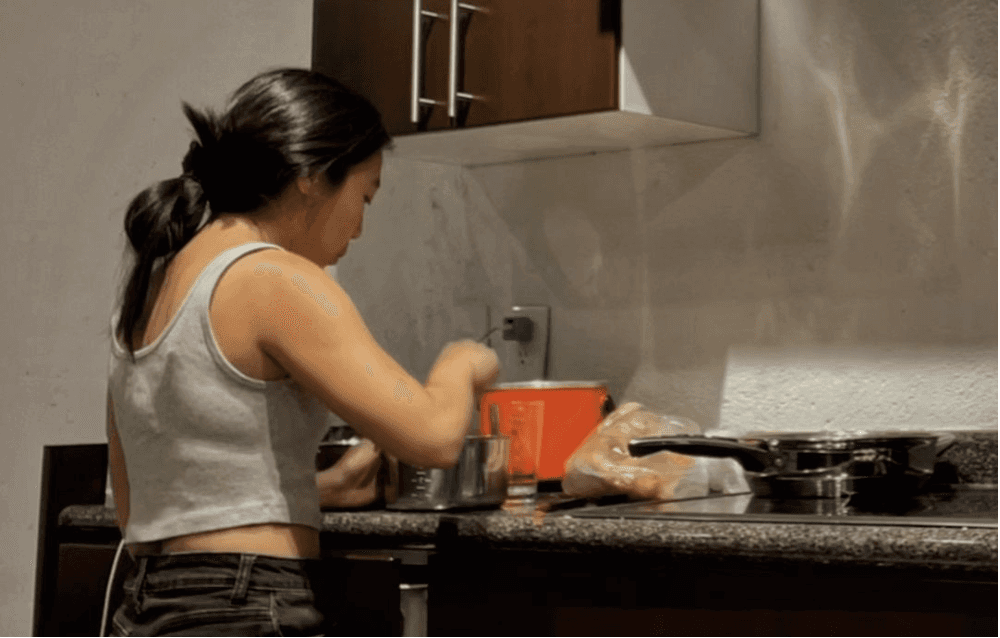
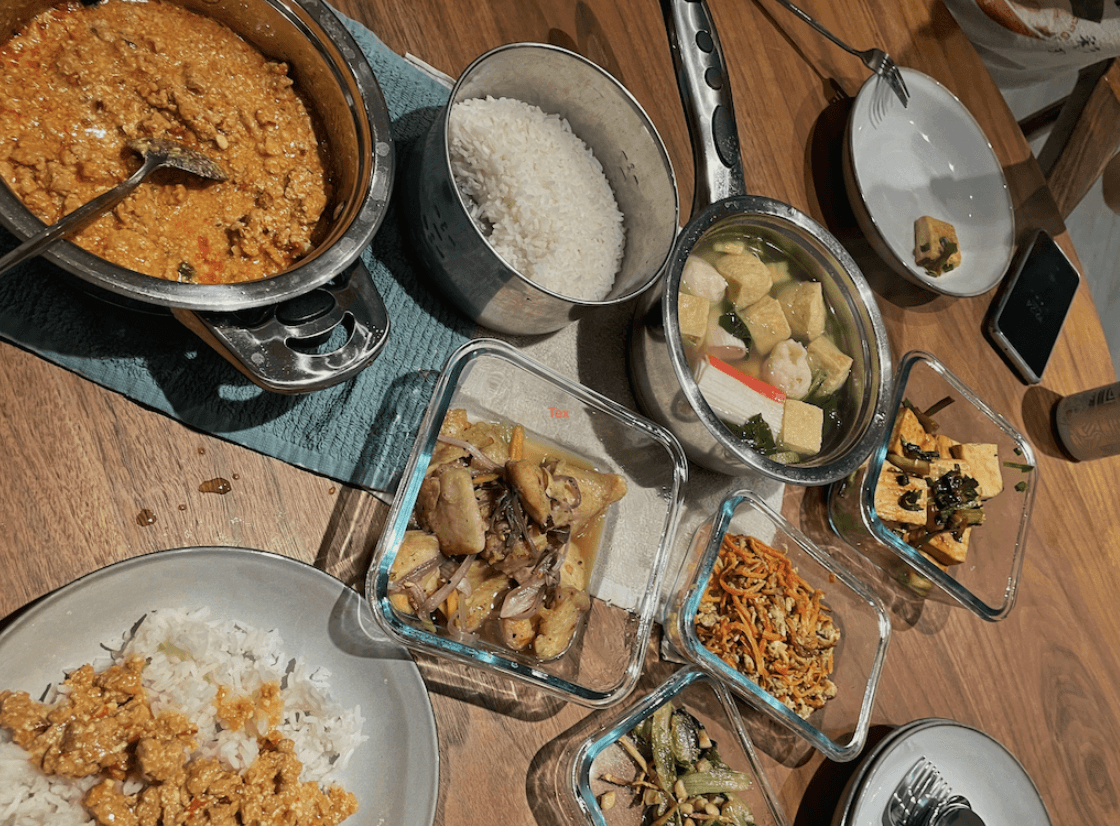
Tatung recognized that the Taiwanese household structure was changing. Families were shrinking. More people were living alone. The three-person and one-person mini cookers were not just a product line extension; they were a direct response to a demographic reality. I know this personally. I carried a three-person Tatung from Taiwan to Mexico when I moved there, because having it felt like bringing a small piece of home with me. That is brand attachment operating exactly as it should. Beyond the physical product, Tatung extended into miniature collectibles: gashapon capsule toys, shaped transit cards, and scale models that turned the iconic silhouette into something people collected and gifted. The rice cooker became a cultural symbol, which is a form of revenue that has almost nothing to do with cooking.
Modernizing without abandoning what made it good.
The smart AI cooker line introduced microcomputer temperature controls and programmable timers while keeping the fundamental simplicity of the original. This is harder than it sounds. Adding technology to a product famous for not needing technology carries real risk of feeling inauthentic. Tatung managed it by treating the smart features as an addition rather than a replacement, preserving the one-switch accessibility for users who wanted it while opening the product to a generation that expects connectivity.
The Strategic Logic, and What Still Needs Work
Looking at these three moves together, the underlying logic is coherent. Tatung accepted that the core product would never generate a healthy repurchase cycle and built revenue streams that don't depend on it. Collectibles get replaced, gifted, and collected in multiples. Collaborations attract consumers who would never have considered a rice cooker a lifestyle purchase. Smaller form factors reach households that the original product never served.
The sustainability narrative is the one thread Tatung has not yet pulled on as systematically as it could. A product that lasts forty years and never enters a landfill is an extraordinary story in an era when consumers are actively looking for reasons to buy less and buy better. That story already exists in every grandmother's kitchen. The opportunity is to tell it loudly, position the brand explicitly as the antidote to disposable consumer culture, and attract the growing segment of buyers who would pay a premium to own something that lasts. Of all the strategic options available, this one requires no new product development and no new partnerships. It is the most immediate lever, and it remains underused.
The other structural gap is relationship continuity, and it is easier to see by looking at a competitor. Zojirushi runs a membership system in Japan called My Zojirushi. Consumers register their product's serial number, receive warranty coverage, and get recipe updates and new product announcements over time. When that consumer's child eventually moves out and sets up their own kitchen, they are already a named person in Zojirushi's system. Zojirushi knows when to send a "first meal in your new home" message, and who to send it to.
Tatung knows it has sold millions of rice cookers. What it does not know is whose kitchens they are sitting in, how old those households are, or when the next purchase occasion in that family might arise. Every household still running a forty-year-old Tatung is a living record of brand loyalty with no address attached to it. The most immediate version of fixing this is simple: give people a reason to register their cooker. A warranty extension, access to a recipe archive, early access to limited-edition colorways. None of that requires a new product. It just requires deciding that the relationship matters beyond the transaction, and building the infrastructure to hold it.
What "Product Success" Actually Means
The Tatung story complicates something that business strategy often treats as settled: that building a better product leads to better business outcomes. Sometimes it does. Sometimes, when the product is good enough to outlast the business model designed around it, the relationship is more complicated.
The companies that navigate this tension well tend to share one characteristic. They define product success and business success as related but distinct targets, and they design for both simultaneously. A product that lasts forty years is a product success. A business that captures only one revenue event per forty years from one family is a business model problem, regardless of how good the product is.
Tatung's legacy is genuine. The engineering is real. The brand trust is earned across generations. The transformation now underway shows a company that understands its problem and is doing something serious about it. The next chapter, building a business model that is as well-engineered as the product that built the brand, is already being written.
That is a far more interesting story than a brand that simply failed.
My Life oversea with Tatung rice cooker
FAQ
Q: Has Tatung actually lost market share?
Not in brand recognition terms. Tatung remains the first brand most Taiwanese consumers associate with rice cookers. The real challenge is repurchase rate: when a product lasts thirty to forty years and passes between generations, the frequency of purchase events drops dramatically, compressing revenue even when brand preference stays high.
Q: What is the Durability Paradox?
The Durability Paradox describes a situation where a product's exceptional longevity undermines the business model that depends on repeat purchases. When a product lasts so long that consumers have no occasion to buy a replacement, engineering success and commercial sustainability come into direct conflict. Tatung is one of the clearest real-world examples of this dynamic.
Q: Why don't consumers buy a new Tatung even when they trust the brand?
Because the existing product still works. Brand preference drives purchase decisions when a consumer has a purchase occasion: a need, a failure, a desire for something better. When the existing product eliminates that occasion by continuing to function perfectly, brand preference has no transaction to convert into.
Q: How is this different from a brand in decline?
In a typical brand decline, consumers actively choose competitors. They switch because something better is available, or because the brand has lost their trust. In the Tatung case, consumers are not switching. They are loyal, brand-aware, and simply not purchasing because there is no functional reason to do so. The diagnosis, and the strategic response, are entirely different as a result.
Q: What has Tatung actually done to address this?
Tatung has moved on three fronts: design collaborations and lifestyle repositioning (Hello Kitty, Disney, SOU·SOU), smaller form factors targeting single-person households and diaspora communities, and smart technology integration that modernizes the product without abandoning its essential simplicity. The collectibles strategy, including gashapon toys and shaped transit cards, has been particularly effective at creating purchase occasions that have nothing to do with replacing a broken appliance.
Q: What strategic opportunity remains most underused?
The sustainability narrative. A product that lasts forty years and never enters a landfill is a genuinely powerful story in the current consumer environment. Tatung has not yet told it systematically. Positioning the brand as a deliberate alternative to disposable consumer culture, backed by a product that genuinely delivers on that promise, would support premium pricing and attract a growing segment of buyers who actively seek durability. It is also the lowest-cost strategic move available, requiring no new product development, no new partnerships, and no new manufacturing capacity.
Q: What does planned obsolescence have to do with this?
Planned obsolescence is the practice of designing products to fail or feel outdated within a predictable timeframe, ensuring a regular repurchase cycle. Most consumer electronics and appliances incorporate some version of this. Tatung's classic design explicitly resists it. The bimetallic thermostat has virtually no failure mode under normal use. This was an engineering choice that prioritized product integrity over business model sustainability, and the commercial consequences have unfolded over decades.
Conclusion
The Tatung electric rice cooker is not a story about a brand that failed. It is a story about a product that succeeded so completely that it outran the business model designed to support it, and then had to figure out what came next.
Brand recognition: intact. Consumer trust: multigenerational. Product quality: unimpeachable. Revenue model: being actively rebuilt, one collaboration and one mini cooker at a time.
The lesson for product strategists and business analysts is precise. Product excellence and business model sustainability require separate, deliberate design. A product built to last forever needs a business built around that reality, through adjacent revenue, upgrade pathways, brand extensions, and relationship strategies that keep the company present across the decades between purchase occasions.
Tatung built something remarkable. What it is building now, the business model worthy of that product, is equally worth watching.
Anita Chen is a cross-cultural business development consultant and the founder of Nita_scovery. She has lived and worked across Taiwan, Mexico, and Bali, and writes about product strategy, brand thinking, and what building for the long term actually requires.
Subscribe Nita_scovery's newsletter The Shine Lab for more on international business, cross-cultural strategy, and the product stories worth paying attention to.
About

Featured Posts



Explore Topics